Write one pattern
A rule for the whole series, not the number.
Spammers rotate through hundreds of numbers from the same block. Type the prefix they share, +91 140, and every one of them is covered.
 Globber Download
On-device call screening for Android
Telemarketers rotate through hundreds of numbers. Globber blocks the shape they share, so one rule like +91 140* silences the entire series before your phone rings.
How it works
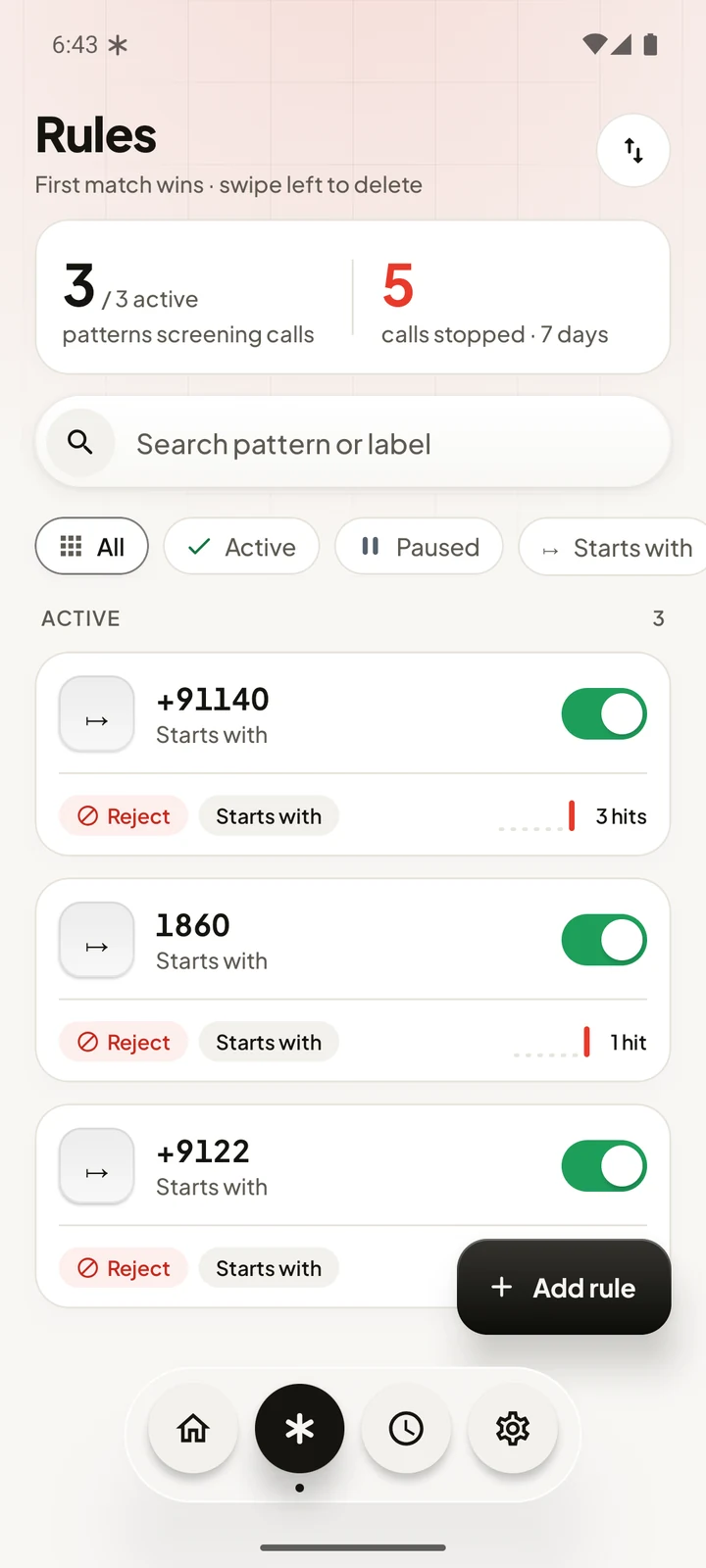
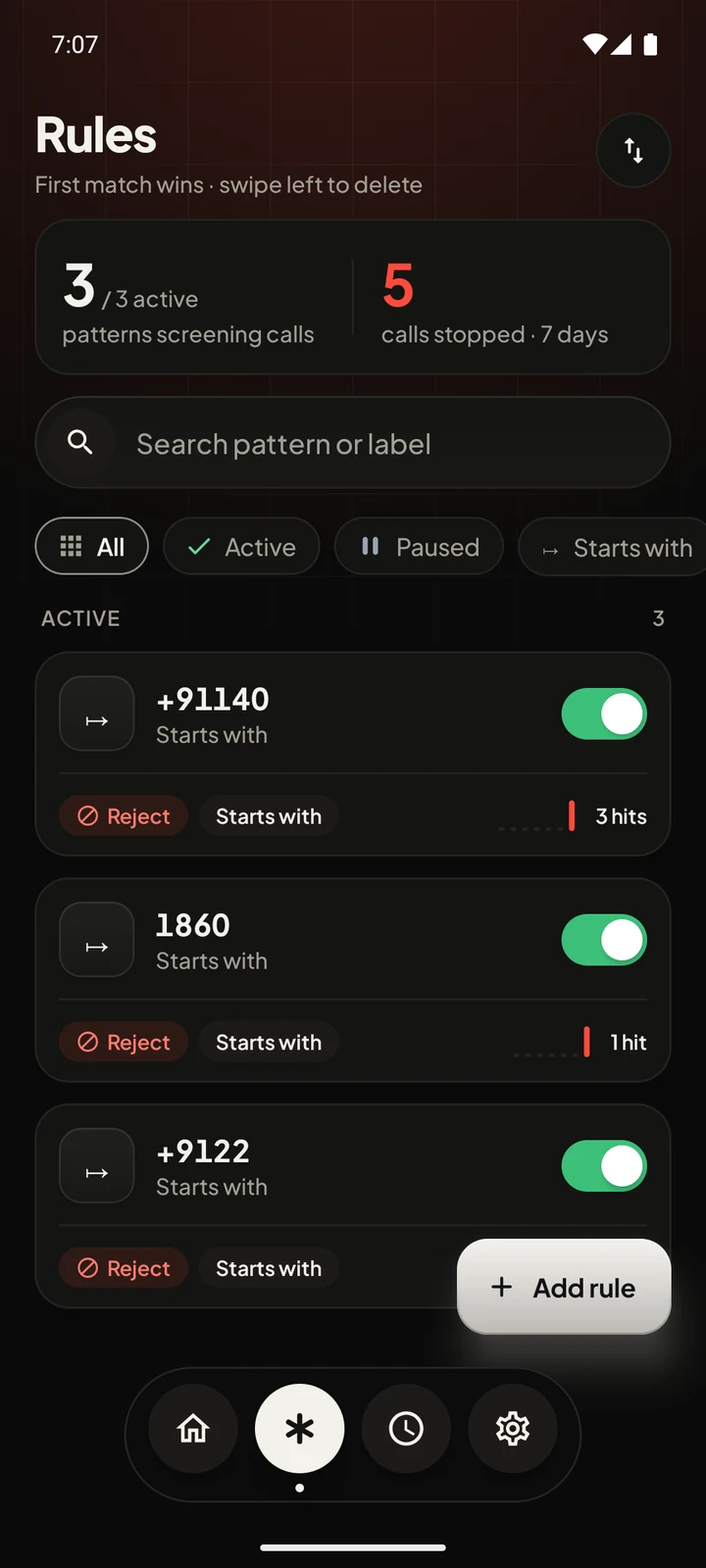
Write one pattern
Spammers rotate through hundreds of numbers from the same block. Type the prefix they share, +91 140, and every one of them is covered.
Let it screen
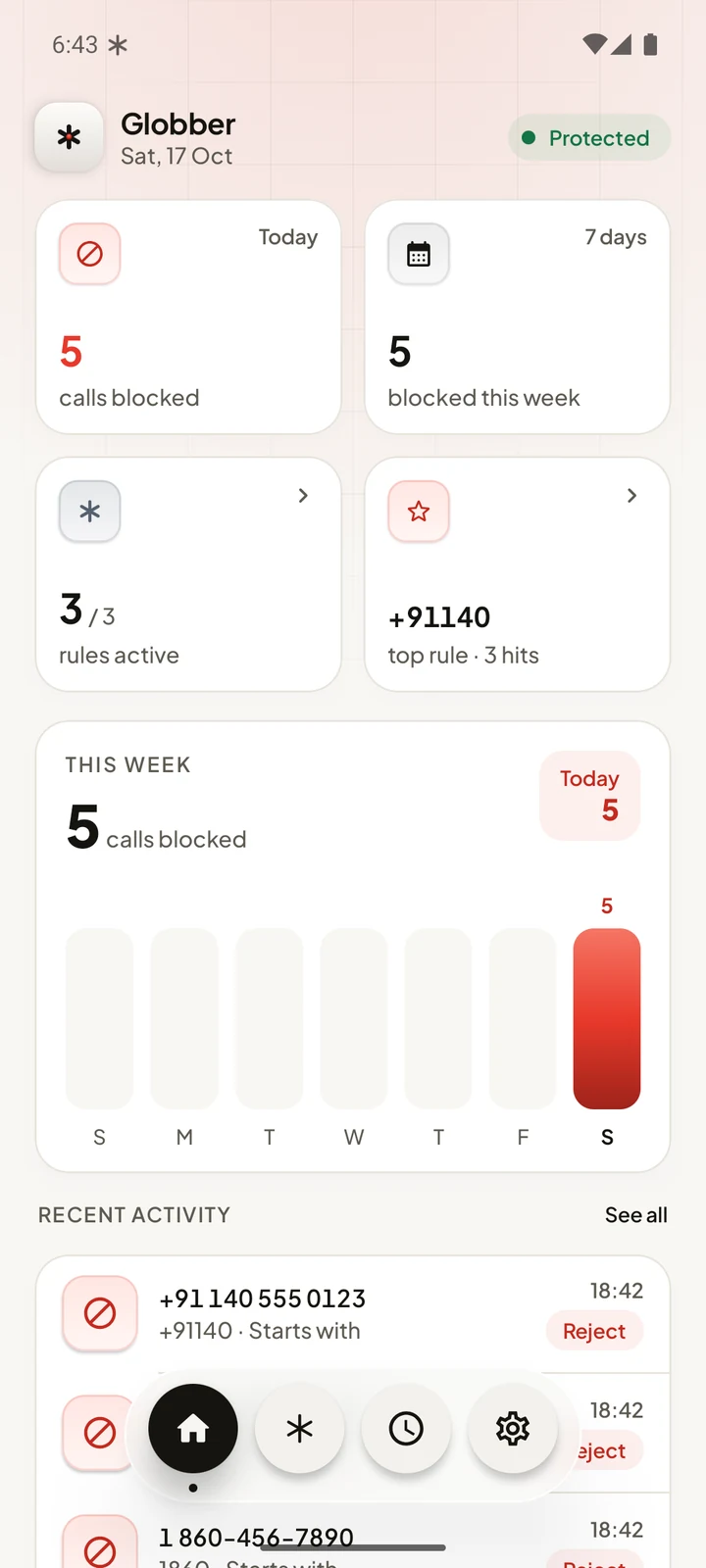
Globber sits in Android’s call-screening slot. Matching calls are rejected, silenced or sent to voicemail in milliseconds, entirely on-device.
See what it caught
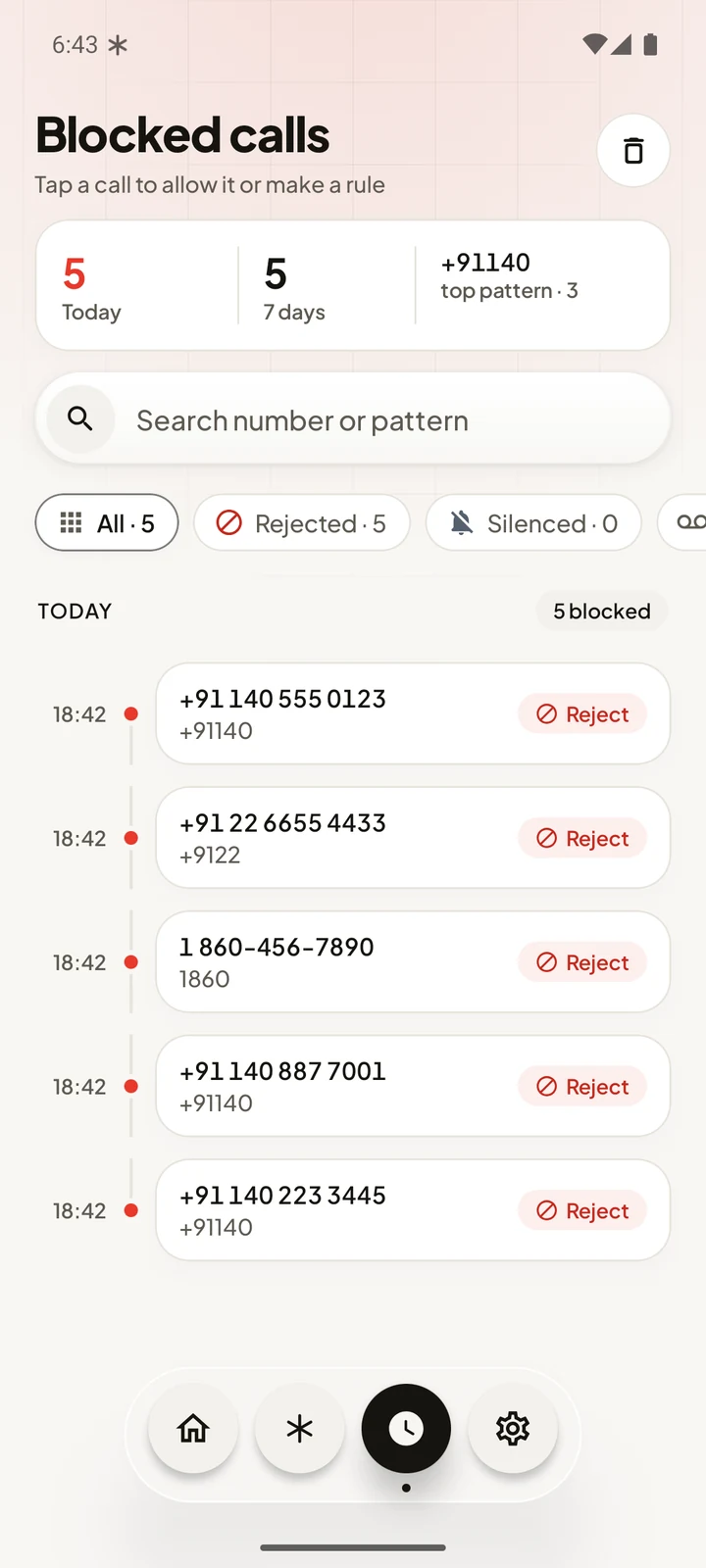
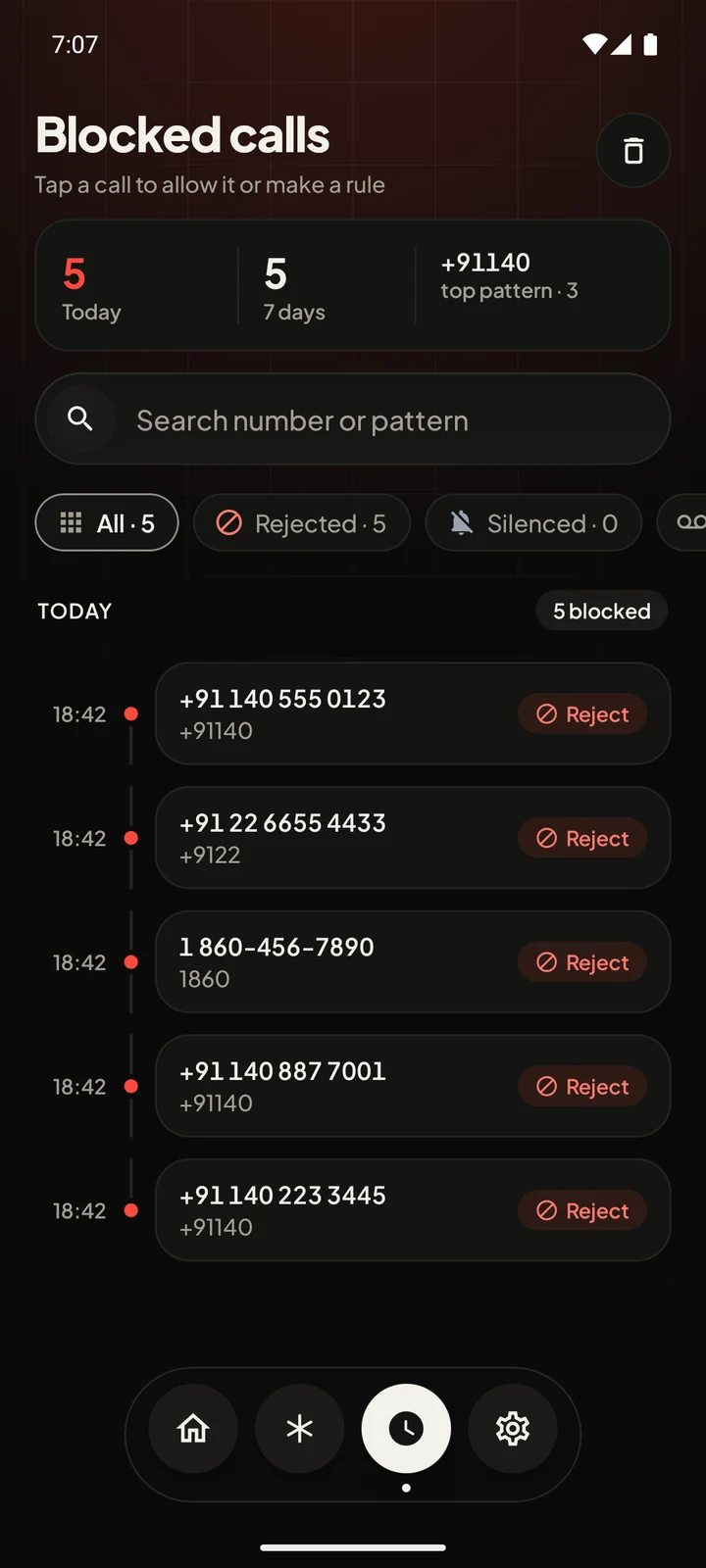
A calm log grouped by day, with the pattern that caught each call. Tap any entry to allow the number or make a rule like it.
Try it live
This is a line-for-line port of the app’s rule engine. Type a pattern and a caller ID to see exactly what Globber would do.
Five ways to match
Starts with
+91 140The default. Silence a telemarketing prefix in one line.
Ends with
0000Robo-dialers love round tails.
Contains
555Any caller ID with that run of digits.
Exact
98812 34567One number, local or international form.
Regex
^\+447\d{9}$Full regular expressions, for surgery.
Designed, not assembled
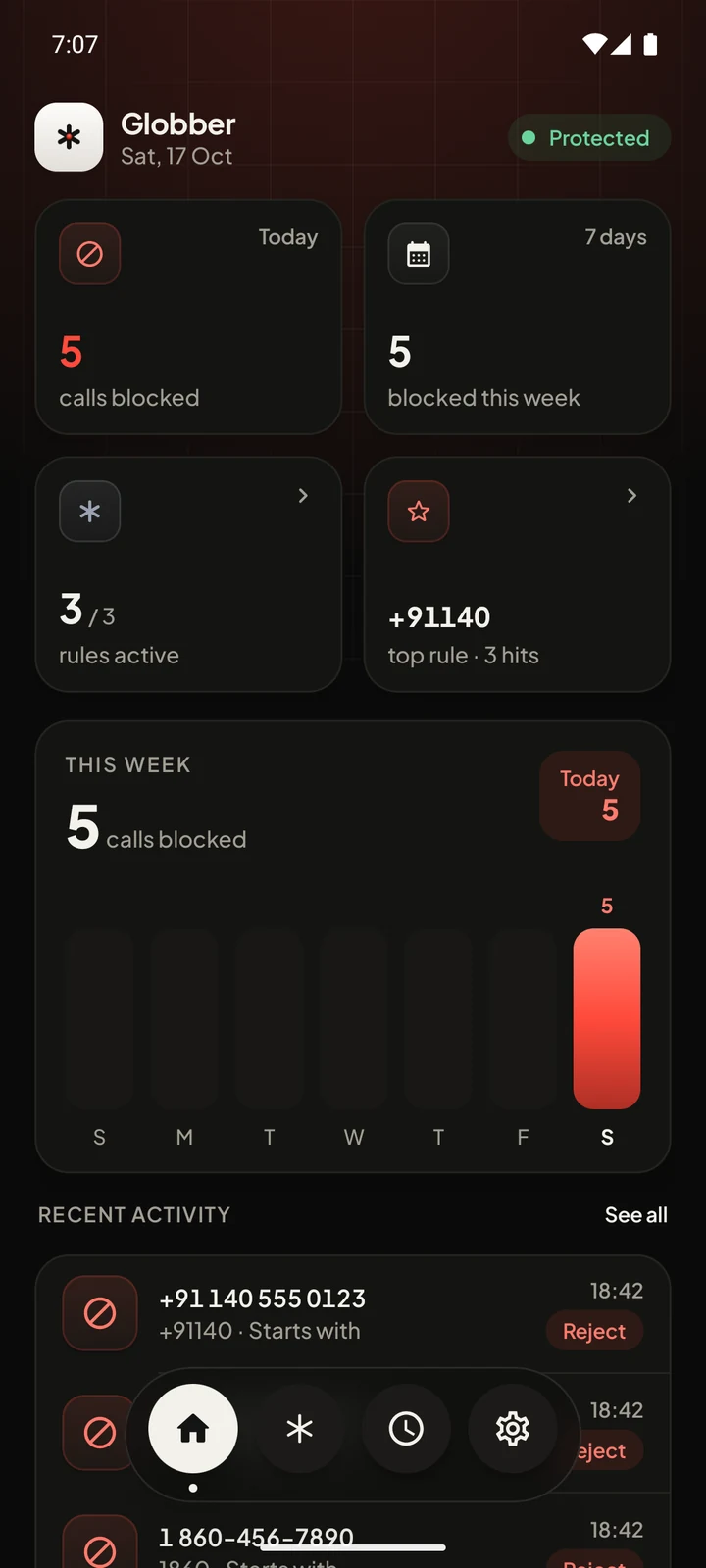
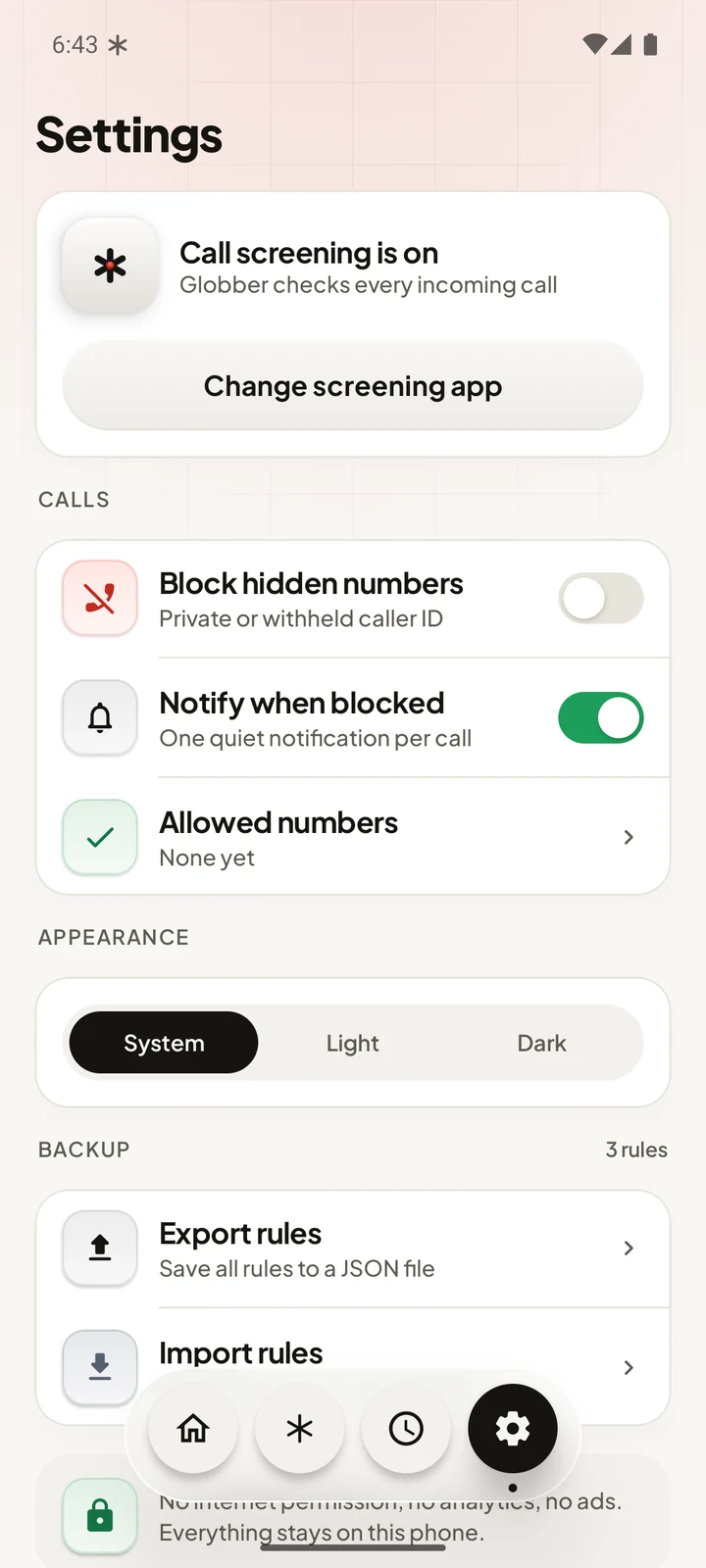
A warm ceramic palette, one signal red, frosted-glass navigation and spring-loaded motion. Drag the handle to switch themes.
 LightDark
Private by design
Not because we promise. Because the app has no internet permission, so it can’t.
Open source · MIT
Kotlin, Jetpack Compose and Room, built on Android’s official call-screening API. No root, no accessibility hacks.
Questions
No. Globber never reads your contacts. Android only routes calls from unknown numbers to call-screening apps, so people you know ring as usual.
Only if a rule matches them. Add any number to Allowed numbers and it always rings, whatever your rules say.
You choose per rule: reject, silence, or send to voicemail. Each one lands in the log with the pattern that caught it.
Nothing. The app has no internet permission at all, so it physically cannot send data anywhere.
Android 10 and newer. It uses the official CallScreeningService, so no root and no hacks.
Free and open source. Android 10 and newer.